The announcement, when it comes, is modest. A small manufacturer adds a second shift, leases the unit next door, buys a machine it had been renting time on. There is no ribbon cutting. The interesting part is not the expansion but the reasoning: after twenty years of chasing the cheapest unit cost, a growing number of small firms are bringing specific products back because the cheapest unit cost was never the whole cost.
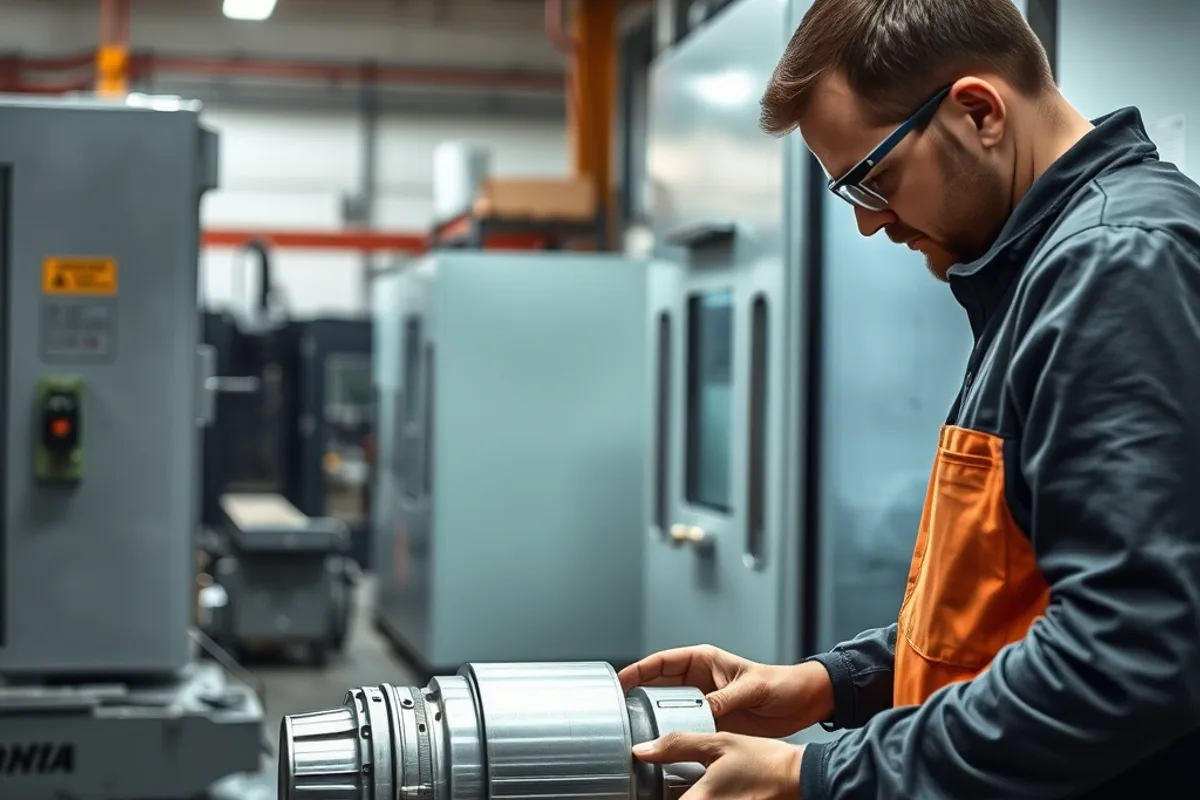
This is not the broad industrial homecoming that politicians like to describe. It is narrower and more practical. A company might reshore one family of parts while keeping another offshore for years. The unit of decision is the product line, not the company, and the logic is usually about time, risk and cash rather than patriotism.
The unit that moved
Ask a small manufacturer what came back and the answer is rarely "everything". It is usually a component with one of three characteristics: a short shelf life, a customer who cannot tolerate a six-week ocean lead time, or a supplier whose quality had become unpredictable. A plastic housing for a medical device. A replacement part for a machine that breaks down at 2am. A seasonal product that misses the season if the container is late.
These are products where the cost of delay exceeds the cost of production. Offshore manufacturing is excellent at making predictable things cheaply at scale. It is less good at responding to a customer who needs 400 units next Tuesday because a distributor changed its forecast.
Why not everything
The firms that succeed at reshoring tend to be ruthless about what they do not bring back. Labour-intensive assembly with stable demand and long lead times usually stays offshore. So does anything requiring a supply chain the domestic market no longer has, from specialist coatings to particular alloys.
A useful rule from the operators we spoke to: bring back the product where you can name the customer, the volume and the deadline. Keep offshore the product where you are guessing. Reshoring a line you do not yet understand is how a small firm turns a supply-chain problem into a capacity problem.
The cost math
The spreadsheets that decide these moves have changed. Ten years ago the comparison was dominated by labour cost per unit. Now the model includes freight volatility, inventory carrying cost, tariff exposure, quality rework and the cash tied up in a container that will not arrive for weeks.
| Cost line | Offshore, typical | Domestic, typical | Direction |
|---|---|---|---|
| Direct labour per unit | Lower | Higher | Favours offshore |
| Freight per unit | Variable, volatile | Low | Favours domestic |
| Inventory needed | 6-12 weeks | 1-3 weeks | Favours domestic on cash |
| Quality rework | Higher, harder to fix | Lower, faster feedback | Favours domestic |
| Engineering changes | Slow and expensive | Same-week possible | Favours domestic |
| Minimum order quantity | High | Low to moderate | Favours domestic for new products |
The table explains why the decision flips for products with high change frequency. If you revise a design twice a year and hold eight weeks of stock, the offshore saving on labour can be eaten by obsolete inventory alone. If the design is stable and the volume is large, the old logic still wins.
The supplier gap
The hardest part of reshoring is not the assembly. It is everything underneath it. A domestic factory that can mould a part still needs the toolmaker, the plater, the fastener distributor and the calibration lab. Many of those small suppliers thinned out during the offshore decades, and the ones that remain are often booked months ahead.
This is why reshoring happens in clusters. A firm that brings back one line discovers it needs a local supplier, and that supplier discovers it needs a second customer to justify a machine. The process is incremental and self-reinforcing, which is also why it is slow. Policy can accelerate it with training and capital, but it cannot conjure a supplier network overnight.
For a small manufacturer, the practical lesson is to map the sub-supply chain before committing. If three of the five inputs still come from one region overseas, the line has not really been reshored. It has been assembled closer to the customer.
Automation as the bridge
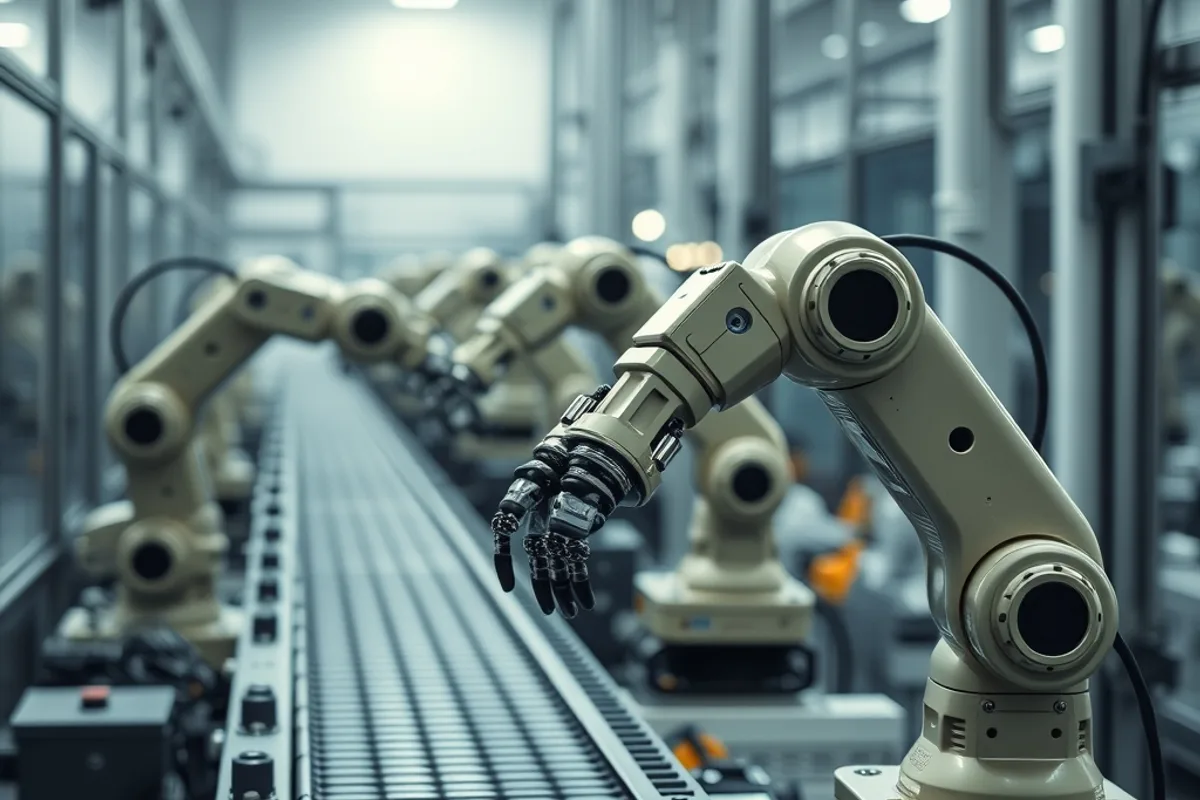
The economics only work because the machines got better. Collaborative robots, cheaper sensors and software that a small team can actually maintain have lowered the volume at which automation pays. A line that needs two operators instead of eight can compete on a product where responsiveness matters more than raw labour cost.
Automation also changes the hiring problem. The firm does not need eight assemblers; it needs one technician who can keep the cell running and one engineer who can program it. That is a different recruitment challenge, and in many regions it is the binding constraint.

The workforce question
Every manufacturer tells the same story about skills. The equipment is available. The customers are asking. The missing piece is people who can set up, maintain and improve a modern production cell. Apprenticeships help, but they take three to four years to produce a confident technician, which is longer than most small firms can plan.
The firms that manage it tend to do two things. They hire for aptitude and train the specific machine, rather than waiting for a perfect candidate. And they build a relationship with a local college or training provider early, before they need the people. Both are slow investments that only look obvious in hindsight.
The playbook for the next line
- Start with the pain. Pick the product where late delivery or quality failure is already costing sales, not the one with the best spreadsheet.
- Map the sub-supply chain. Confirm that the inputs can be sourced within a workable distance before you commit to assembly.
- Model cash, not just cost. Include the inventory reduction and the working capital released. That is often the real return.
- Automate the constraint. Automate the step that limits throughput or depends on scarce skill, not the step that is easiest to demo.
- Keep the offshore option alive. Dual sourcing protects you while the domestic line matures and gives you leverage on price.
- Tell the customer. Shorter lead times are a sales argument. If the customer does not know, you have paid for responsiveness and given away the benefit.
What could go wrong
The failure mode is familiar: a firm brings back a line to satisfy a large customer, the customer changes its forecast, and the new capacity sits idle while the fixed costs stay. Reshoring is a capacity decision disguised as a sourcing decision. If the demand is not contractually secure, the domestic line becomes a bet on someone else's planning.
The second failure is underestimating the learning curve. A new line rarely hits its quoted cycle time in month one. Build in a ramp, keep a buffer of stock from the old supplier, and do not promise the customer the new lead time until you have measured it for a full quarter.

None of this adds up to a dramatic reversal of global trade. It adds up to something more durable: a generation of small manufacturers learning to treat supply chains as a portfolio rather than a single bet. Some products will stay offshore forever. Some will come home and stay. The firms that thrive will be the ones that can tell the difference, one product line at a time.